
The Most Common Fall Hazards at Home and How to Fix Them
A home can feel familiar and comfortable, yet still have areas that make everyday movement harder than it needs to be. Small details such as lighting, flooring, stairs, and bathroom setup can affect how easily someone moves through their daily routines.
The good news is that thoughtful home modifications can address many common fall hazards. The right solution depends on the individual, their abilities, and how they use each space.
Bathroom: More Than Just Slippery Floors
Bathrooms require frequent transitions between sitting, standing, stepping, and reaching. Wet surfaces can make those movements more challenging, particularly when getting in or out of a tub or shower.
Consider modifications such as:
- Grab bars positioned where they provide support during transfers and transitions.
- Shower seating to provide a stable place to sit while bathing or managing tasks such as drying.
- Handheld showerheads that make bathing easier from a seated or standing position.
- Walk-in or low-threshold showers that reduce the amount of stepping required to enter and exit.
- Non-slip flooring and appropriate bath surfaces to improve traction.
Stairs: Support Every Step
Stairs can become more challenging when there is only one railing, no railing, or inadequate lighting. Even when someone can comfortably manage stairs today, changes in strength, balance, or endurance can affect how they navigate them over time.
The goal isn’t necessarily to eliminate stairs. It’s to make the home’s vertical transitions work with the person’s current abilities.
Potential solutions include:
- Adding secure handrails where additional support is needed.
- Improving lighting at the top and bottom of the staircase.
- Using contrasting surfaces or visual cues to make stair edges easier to identify.
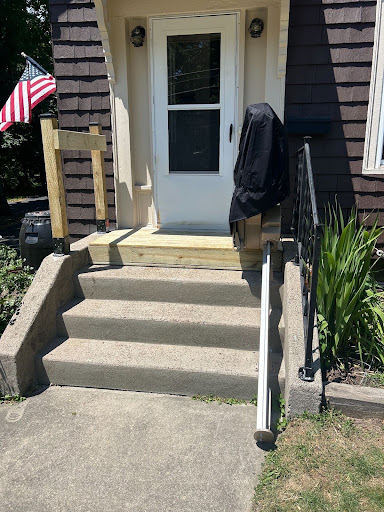
- Considering a stair lift when stairs are no longer a practical part of someone’s daily routine.
Lighting: Seeing the Path Ahead
Poor lighting is easy to overlook because the problem may only become apparent when moving through the home at night or when the lighting levels change.
Look at areas such as hallways, staircases, entrances, bathrooms, and bedrooms. Motion-activated lighting, additional fixtures, illuminated switches, or strategically placed nightlights can make pathways easier to navigate.
An important thing to consider is when and how someone uses each space. A hallway that feels adequately lit during the afternoon may need a very different solution for someone who regularly gets up during the night.
Rugs, Clutter, and Everyday Pathways
Loose area rugs, cords, furniture, shoes, baskets, and other household items can gradually create obstacles in frequently used pathways.
Rather than simply telling someone to remove everything from the room, consider how the space functions. Is there enough room to comfortably walk with a cane or walker? Can someone turn around without bumping into furniture? Is there a clear route between the bedroom and bathroom?
Securing or removing loose rugs, managing cords, rearranging furniture, and creating wider pathways can make everyday movement easier without changing the purpose of the room.
Thresholds and Changes in Flooring
Small changes in floor height between rooms or at exterior doors can be easy to miss but may affect how someone steps through a doorway.
Depending on the situation, solutions may include low-profile transitions, threshold modifications, improved lighting, or an accessible entrance such as a ramp.
These changes are particularly important when someone uses a walker, wheelchair, or other mobility device, since even a small threshold can affect how easily they move between spaces.
Getting In and Out of the Home
The front entrance is another area worth evaluating. Steps, uneven walkways, narrow doorways, or a lack of stable handholds can make entering and exiting the home more difficult.
Depending on the person’s needs, accessibility solutions may include:
- Handrails
- Entry ramps
- Platform lifts
- Improved pathways
- Doorway modifications
The right solution should reflect how the person enters and exits the home, whether they use a mobility device, and what they need to carry or manage along the way.
Look at the Home Through the Person’s Routine
Identifying fall hazards isn’t just about walking through a checklist of potential problems. It’s about understanding how a person actually uses their home.
A proper assessment looks at the interaction between the individual, their abilities, their environment, and their routines. A recommendation that works well for one person may not be the right solution for someone else.
At Oakley Home Access, the goal is to help create a home that supports the way you live today while allowing room for your needs to change over time. By addressing small barriers and choosing modifications based on function, accessibility can become a natural part of a safer, more comfortable, and more independent home.