Hidden Challenges Can Create Real Barriers: How Your Home Can Support Changing Mobility Needs
October includes Invisible Disabilities Week, a time to raise awareness of conditions that may not be immediately visible but can significantly affect everyday life.
Chronic pain, balance conditions, neurological fatigue, and other health challenges can influence how someone moves through their home, even when there are no obvious signs of a mobility limitation. Tasks that once felt routine, such as climbing stairs, stepping into the shower, or walking from the driveway to the front door, may require more energy, support, or planning.
A home that accommodates these changing needs can help people maintain their routines, confidence, and independence without requiring major lifestyle changes.
Understanding the Connection Between Mobility and Your Home
Mobility isn’t just about whether someone can walk. It also involves balance, endurance, coordination, strength, pain levels, and the ability to manage everyday movements consistently.
For example, someone experiencing chronic pain may find repeated stair climbing physically demanding. A person living with a balance condition may feel less comfortable navigating uneven flooring. Someone experiencing neurological fatigue may move well in the morning but have difficulty managing the same activities later in the day.
These challenges can be difficult for others to recognize, but the home environment can make a meaningful difference. The goal is to identify where everyday activities require unnecessary effort and explore modifications that better support the individual’s abilities.
Plan Around Changing Needs, Not Just Current Abilities
One important consideration is that mobility can fluctuate. Someone experiencing chronic pain or neurological fatigue may have different abilities depending on the time of day, activity level, or other factors. This is why accessibility recommendations should be based on the individual rather than a standard checklist.
An occupational therapist can assess how someone performs daily activities and identify environmental changes that may make those tasks easier. A physical therapist can offer insight into mobility, strength, balance, and movement. Caregivers can also help identify activities that have become more difficult or areas where additional support may be useful.
A functional home assessment can bring these perspectives together to help determine which modifications are appropriate, whether that means improving a pathway, adapting a bathroom, or exploring a larger accessibility solution.
Start With Entrances and Outdoor Pathways
Getting into and out of the home is an important part of maintaining independence. However, outdoor steps, uneven walkways, raised thresholds, and poorly lit entrances can create barriers for people with changing mobility needs.
Consider evaluating:
- Outdoor steps and handrails: Are railings secure and positioned where someone can comfortably use them?
- Walkways: Are surfaces even, clear, and wide enough for the person to move through comfortably?
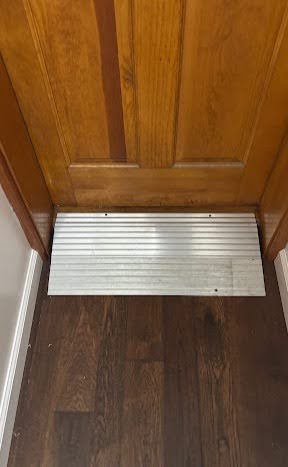
- Doorway thresholds: Are there raised edges that make it difficult to walk or maneuver a mobility device through the entrance?
- Entry and exit space: Is there enough room to approach the door, open it, and move through safely?
Depending on the person’s needs and the home’s layout, solutions may include additional handrails, threshold modifications, improved lighting, or an accessible ramp.

Make Stairs More Manageable
Stairs can present challenges for people experiencing pain, reduced endurance, balance difficulties, or weakness. Even when someone can climb stairs independently, repeated trips between floors may become tiring or uncomfortable.
Some modifications are relatively simple. Better lighting, secure handrails, and clearer stair edges can help someone navigate the space.
For individuals who have difficulty climbing stairs, a stair lift may provide an alternative way to access different levels of the home. This can be particularly helpful when essential spaces, such as a bedroom or full bathroom, are located upstairs.
The right solution depends on how the person uses the stairs, their current mobility, and whether they can safely manage the transfers involved.

Consider Bathroom Accessibility
Bathrooms require a combination of movements that can be challenging for people with different types of invisible disabilities. Standing for extended periods may aggravate pain or fatigue, while stepping over a tub wall may be difficult for someone with balance concerns.
Depending on individual needs, helpful modifications may include:
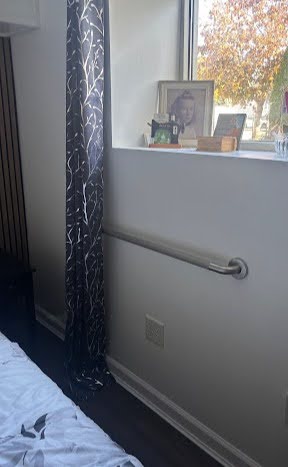
- Grab bars positioned to support specific movements, such as entering or exiting the shower.
- Shower seating to reduce the need to stand throughout bathing.
- Handheld showerheads that make bathing easier while seated.
- Low-threshold or accessible showers that reduce the need to step over a high barrier.
- Slip-resistant surfaces and improved lighting to support comfortable movement.
Consider how a person moves through the entire bathing routine, not just how they enter the shower. Turning, reaching for toiletries, adjusting water controls, and stepping out can all place different demands on balance, strength, and endurance.

Improve Everyday Pathways and Room Layouts
Barriers aren’t always large or obvious. A narrow hallway, loose rug, cluttered walkway, or piece of furniture positioned in the wrong place can make movement more difficult.
For someone who uses a walker, wheelchair, or cane, these obstacles can also limit access to rooms that would otherwise be easy to reach.
Look for opportunities to:
- Clear pathways between frequently used rooms.
- Secure or remove loose rugs.
- Manage electrical cords and other tripping obstacles.
- Create enough space to turn and maneuver a mobility device.
- Improve lighting in hallways and transitions between rooms.
- Adjust furniture placement to make everyday activities easier.
These changes can help someone navigate the home with less effort while keeping familiar routines and living spaces intact.
A More Accessible Home Supports More Than Mobility
Invisible disabilities can affect how people experience their homes, even when those challenges aren’t apparent to others. Making a home more accessible isn’t about making assumptions about someone’s abilities. It’s about recognizing that people have different needs and creating environments that support them.
During Invisible Disabilities Week, it’s worth remembering that accessibility isn’t only for people who use wheelchairs or have visible mobility limitations. Thoughtful home modifications can also support individuals managing pain, fatigue, balance difficulties, and other challenges that affect everyday movement.
At Oakley Home Access, the focus is on understanding how people use their homes and identifying solutions that support comfort, safety, and independence. With the right modifications, a home can become a better fit for the person living in it, both today and as their needs change over time.